


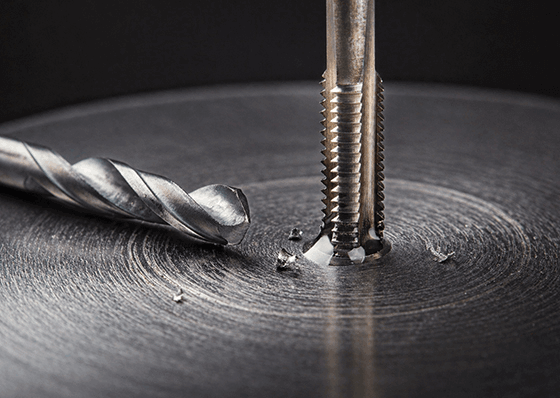
Choosing the right tap takes more than matching the thread size to the print. The real decision starts earlier, with the application itself. You need to know whether the job is better suited to a hand tap or a machine tap, then work through the details that affect performance: workpiece material, hardness, thread depth, hole type, tap geometry, coating, and substrate. Those factors all shape thread quality, tool life, and how smoothly the tapping cycle runs. At Clarkson-Osborn Tools, we help customers sort through those variables every day. This guide breaks down the main decision points so you can choose the right tapping tool with more confidence and avoid problems that show up too late, after production slows down or taps start failing.
Choosing the Right Tap Material for Hand Tap vs. Machine Tap Applications
When a Hand Tap Is the Better Choice
Hand taps are designed for manual tapping, usually with a tap wrench or bench setup where the operator needs close control over feed and alignment. They are often the better option when the work is low volume, when threads need to be repaired, or when you are dealing with a one-off part that does not justify a powered setup.
In these situations, operator feel matters. You can back the tap out, clear chips, and manage thread depth more carefully, which is especially useful when the part is awkward to fixture or the thread needs to be chased rather than cut from scratch. Hand taps also make sense for maintenance work, prototype jobs, and shops where throughput is less important than flexibility.
Ideal hand tap use cases:
- Repairing damaged threads
- Tapping small production runs
- Bench work and maintenance tasks
- Jobs where thread depth needs close manual control
When a Machine Tap Makes More Sense
Machine taps are built for powered equipment such as drill presses, tapping heads, CNC machines, and production cells. They shine when the goal is repeatability, output, and tighter process control across many parts. When thread pitch, feed rate, and spindle speed are matched correctly, a machine tap can produce consistent results with less operator variation.
This becomes more important as volumes increase or the material gets tougher to tap. A machine tap is usually the better choice when cycle time matters, the work must stay uniform from part to part, or the application calls for a tap geometry designed around chip control at speed. In higher-volume operations, the right machine tap also helps reduce interruptions caused by chip packing, premature wear, or poor thread finish.
Ideal machine tap use cases:
- Repetitive production work
- CNC or powered tapping operations
- Jobs requiring consistent thread pitch accuracy
- Harder materials or demanding cycle times
How Tap Material Affects Tap Selection
When we talk about tap material, we mean the substrate the tool is made from, not the material being tapped. In practical terms, tap material affects how well the tool handles heat, abrasion, torque, and long production runs.
High-speed steel, or HSS, is a dependable general-purpose choice. It offers a solid balance of toughness, cost, and versatility, which makes it a common fit for many hand tap and machine tap applications. Cobalt grades add heat resistance and wear resistance, which can make a noticeable difference in tougher materials or longer machine cycles where heat builds quickly.
|
Substrate Type |
Main Strengths |
Best-Fit Applications |
|
HSS |
Tough, versatile, economical |
General-purpose tapping, maintenance work, softer to moderate materials |
|
Cobalt |
Better hot hardness and wear resistance |
Stainless steel, harder alloys, longer machine runs |
Tap material should always be matched to material compatibility. A general-purpose HSS tapping tool may work well in mild steel or aluminum, while a cobalt option may be the better call for stainless or tougher alloy steels where edge wear becomes a bigger risk.
How Workpiece Material Changes the Decision
The material in front of you changes the selection before the tap even touches the hole. Soft, gummy materials behave differently from hard or abrasive ones, and chip formation is a major reason why.
Aluminum and other non-ferrous materials often produce long chips, so geometry and finish need to support smooth evacuation. Mild steels are more forgiving, but hardness still matters. Stainless steels and higher-strength alloys usually demand more from the tap material, cutting edge, and coating. In some materials, thread forming may be worth considering because it displaces material rather than cutting it, which can improve thread strength when the material is ductile enough.
|
Workpiece Material |
Key Considerations |
Common Tap Direction |
|
Aluminum and soft non-ferrous |
Long chips, lower friction, clean finish |
Bright or low-friction cutting taps, some form taps |
|
Mild steel |
Balanced machinability, general use |
HSS cutting taps, spiral point in through holes |
|
Stainless steel |
Heat, work hardening, higher torque |
Cobalt taps, strong geometry, suitable coatings |
|
Ductile materials |
Forming may reduce chips |
Thread forming where hole prep and material allow |
Why Through Holes and Blind Holes Require Different Taps
A through hole goes all the way through the part. A blind hole stops before it breaks through. That difference changes chip evacuation, and chip evacuation often determines whether a tap runs cleanly or fails early.
- Spiral point taps push chips forward, which makes them a strong choice for through holes.
- Spiral flute taps draw chips back out of the hole, which is why they are commonly used for blind holes.
- Form taps create threads without producing cutting chips, but they require the right material compatibility and hole size control.
Cutting taps are still the right answer in many jobs, especially where the material is less suitable for thread forming or where standard thread production is preferred.
How Thread Depth and Thread Pitch Influence Performance
Deeper threads increase contact length, torque, and the chance of chip congestion. Finer thread pitch can also raise the difficulty level because the tool is cutting more closely spaced threads with less room for chips to clear. That combination can put more stress on the tapping tool, especially in blind holes or harder materials.
In a hand tap application, that may show up as a heavier feel and a greater need to reverse the tap frequently. In a machine tap application, it can show up as rising load, edge wear, or inconsistent thread quality from part to part. A deeper blind hole in stainless steel with a fine thread pitch is a very different job from a shallow through hole in aluminum, even if the nominal diameter looks manageable on paper.
Tap Styles, Coatings, and Geometry That Support Better Results
Tap style and geometry help control chips, cutting pressure, and thread finish. That is why selection should go beyond size and substrate.
- Hand taps: Best for manual control, repair work, and smaller batches.
- Spiral point taps: Well-suited to through holes because they drive chips forward.
- Spiral flute taps: Better for blind holes where chips need to come back out.
- Form taps: Best for suitable ductile materials when chip-free thread forming is preferred.
Surface condition matters too. On our taps page, you will find options built for different materials and operating conditions. Bright finishes can work well in softer non-ferrous materials, while oxide or other coated options can help improve lubricity, wear resistance, and tool life in more demanding jobs.
|
Finish or Treatment |
What It Helps With |
Typical Use |
|
Bright |
Lower friction, clean chip flow |
Aluminum and softer non-ferrous materials |
|
Oxide or coated options |
Wear resistance, lubricity, heat control |
Steels, stainless, longer machine runs |
A Simple Checklist for Choosing the Right Tapping Tool
- Identify whether the job calls for a hand tap or machine tap.
- Confirm the workpiece material and its hardness.
- Check thread depth and required thread pitch.
- Determine whether the hole is through or blind.
- Choose the tap style that best supports chip control.
- Select the right surface treatment for the material and operating conditions.
- Match the tap material, such as HSS or cobalt, to the job demands.
Choose Tap Material and Tap Style With More Confidence
The right tap material choice starts with the application. Once you know whether the job belongs to a hand tap or a machine tap, the rest of the decision becomes much clearer. Workpiece material, thread pitch, hole type, and tap geometry all shape how the tool performs and how reliable the finished thread will be. A better match usually leads to cleaner threads, longer tool life, and fewer production headaches. At Clarkson-Osborn Tools, we help customers narrow those choices with practical guidance and proven product options backed by more than 50 years of cutting tool experience. Reach out to Clarkson-Osborn Tools today at (905) 453-4680, email us at info@clarkson-osborn.com or click here to get in touch online.
